Visible-condition review
Document accessible roof areas and visible details such as membrane or metal conditions, seams, penetrations, flashings, drainage, perimeters and rooftop transitions.
 COMMERCIAL
Document the visible conditions. Understand the priorities. Make the next property decision with a clearer record of what deserves attention.
Discuss your property ↗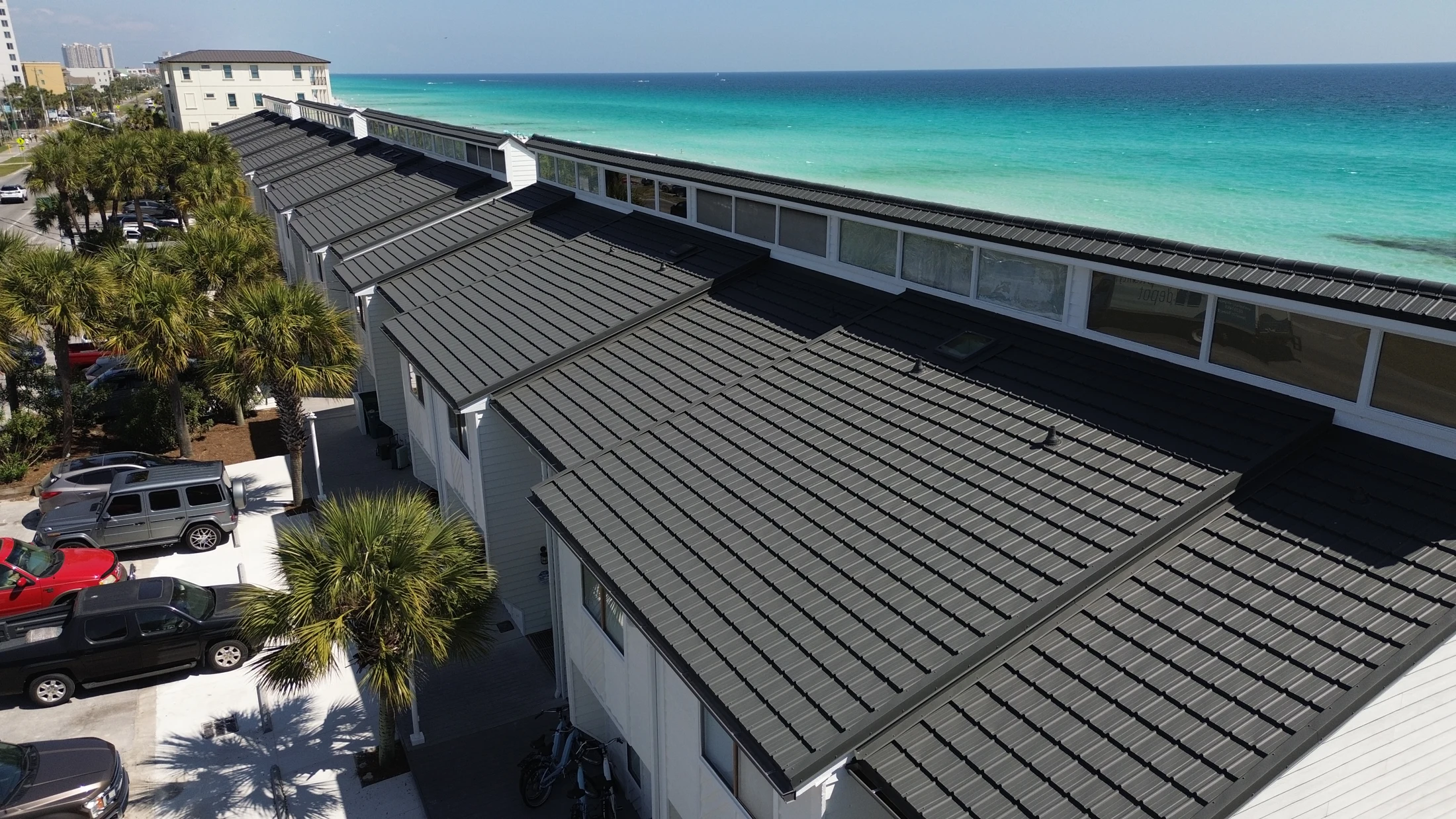
Prefer a separate window? Open the assessment form.
The assessment is designed to organize visible information for commercial decision-makers. It is a business planning tool, not a substitute for engineering, destructive testing, structural analysis, code certification, insurance coverage determination or a manufacturer warranty inspection.
Gulf Breeze owners and managers can use the dedicated commercial roof assessment framework for Gulf Breeze properties, subject to coverage confirmation.
Document accessible roof areas and visible details such as membrane or metal conditions, seams, penetrations, flashings, drainage, perimeters and rooftop transitions.
Create a dated visual record of observed conditions so owners and managers have better information for maintenance and budgeting discussions.
Organize observations into Immediate, Near-Term and Monitor categories so attention can be directed where the property decision requires it.
Discuss whether repair, preventative maintenance, monitoring, additional investigation, coating/retrofit evaluation or replacement planning deserves the next conversation.
The categories below organize observations; they do not establish cause, code compliance, warranty coverage or a final repair scope on their own.
Visible conditions or known operating issues that merit near-term coordination, repair discussion or further investigation based on the actual property context.
Maintenance, repairs, detail work or additional review that may not be an emergency but should be incorporated into the property's upcoming roof plan.
Conditions worth recording so the owner or manager can compare them over time and make later decisions from a better roof history.
Commercial roofs contain details that can deserve periodic attention before water reaches the building. Preventative maintenance starts with documentation and appropriate follow-through—not a guarantee that every roof can be extended indefinitely.
Document visible drain, scupper, gutter and ponding-area concerns where accessible and appropriate.
Record visible seam, lap, transition and termination conditions on applicable roof systems.
Review visible roof penetrations, curbs, flashings, walls and equipment transitions for maintenance discussion.
Document visible edge, perimeter and accessory conditions that may influence repair or maintenance planning.
Photographs document what was visible at the time of review. They do not by themselves establish leak source, concealed moisture, deck/substrate condition, structural adequacy, warranty coverage or the final repair method.
A useful roof file can help a property team compare conditions, understand recurring issues and prepare for repair or capital-planning conversations.
Keep dated assessments and condition photos together so later changes can be compared against prior observations.
Track locations, dates, known repair scopes and recurring issues instead of relying only on institutional memory.
Retain available installation, manufacturer, warranty and service records. ECR should not infer warranty status when documentation is unavailable.
Record upcoming budget cycles, board meetings, insurance renewals, refinancing, sale plans or other events that may affect roofing decisions.
No. Assessments can support condition documentation, preventative maintenance, recurring-repair review, repair-vs.-replacement planning and capital budgeting even when there is no active interior leak.
No. The point is to document visible conditions and discuss the practical next step. Depending on the property, that may be repair, maintenance, monitoring, additional investigation, coating or retrofit evaluation where appropriate, or replacement planning.
Maintenance scope should be property-specific. The assessment can identify visible areas that deserve discussion—such as drainage, seams, transitions, penetrations, flashings, perimeters or rooftop details—but the actual repair or maintenance scope should be confirmed separately.
Not from a basic visual review alone. A visual assessment can inform planning, but concealed moisture, substrate/deck conditions, structural adequacy and precise remaining service life may require additional investigation or specialist input.
No. A basic Commercial Roof Asset Assessment is a visual business assessment unless a different written scope is agreed. Engineering, destructive testing, structural analysis, code certification, insurance-coverage determination and warranty inspection are not implied.