Emerald Coast RoofscapesCOMMERCIAL
DIVISION
Let’s meet ↗
Explore
COMMERCIAL ROOFING03 / TPO, PVC & low-slope

The right system.
For this building.

Repair, maintain or plan a new low-slope roof. Begin with the existing assembly, the operating requirements and the property’s long-term objective.

Discuss your property ↗
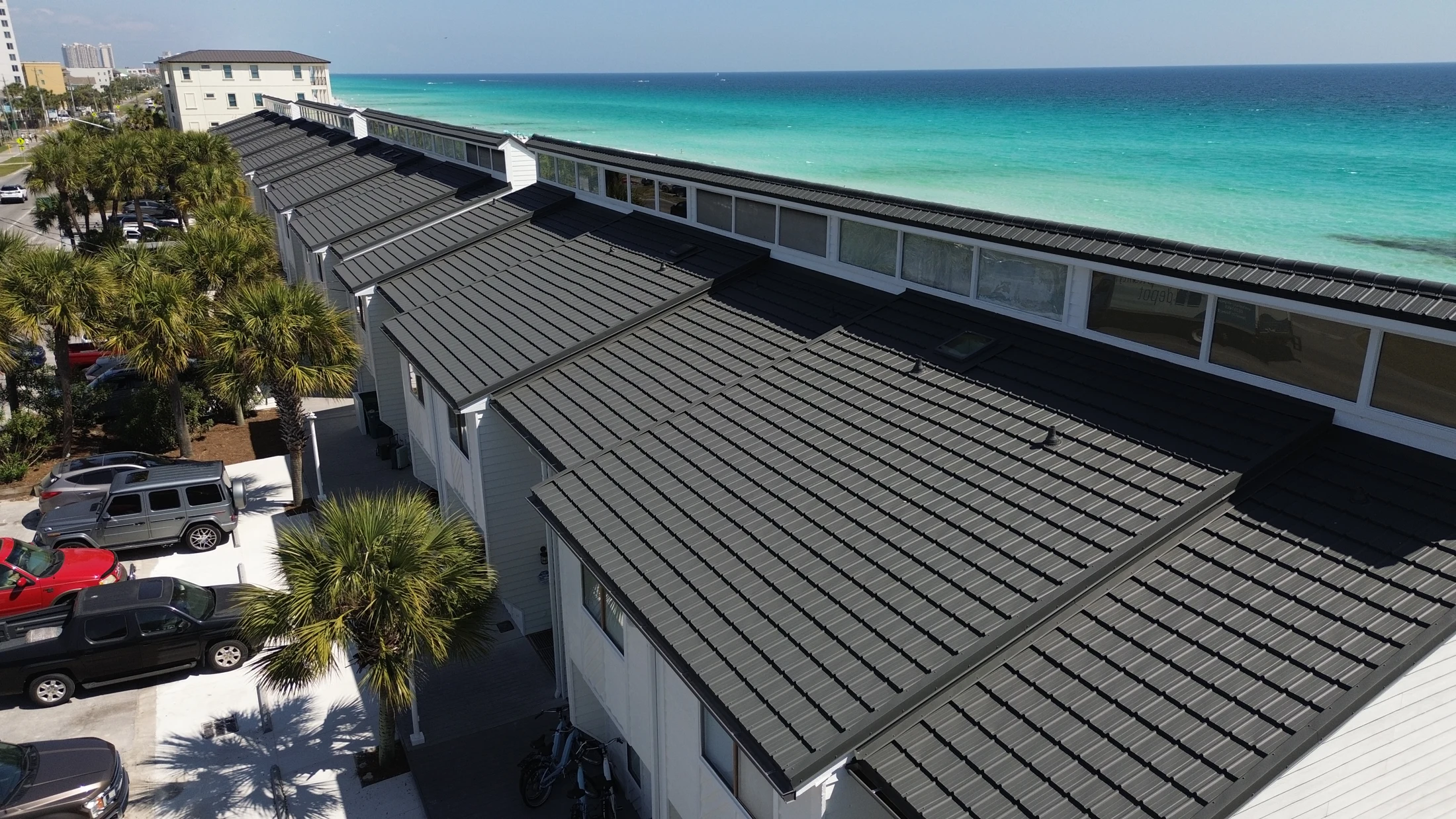
ECR project: Green Reef in Miramar Beach
ECR project · Green Reef, Miramar Beach
Green Reef · Miramar Beach
Retail & OfficeMultifamilyCondominiums & HOAsHospitalityIndustrialInstitutional
Thermoplastic Single-Ply Roofing

TPO and PVC are not just “white flat roofs.”

TPO and PVC are thermoplastic single-ply roof membranes commonly used on commercial low-slope buildings. Their seams can be heat-welded. The correct repair or replacement approach still depends on the actual roof system, assembly, details, exposure, attachment, insulation, drainage, condition, and project requirements.

Property teams can also review Gulf Breeze TPO and low-slope roof planning in the context of access, tenants and other building work.

TPO

Commercial TPO roofing

TPO is a thermoplastic single-ply membrane used on low-slope commercial roofs. A property conversation may involve seams, flashings, penetrations, drainage, prior repairs, membrane condition, insulation concerns, attachment, and whether the owner's goal is repair, maintenance, recover evaluation, or replacement.

PVC

Commercial PVC roofing

PVC is also a thermoplastic single-ply membrane with heat-welded seams. System selection can depend on project-specific requirements, including building use and exposure. ECR should not assume that PVC, TPO, or any other membrane is the correct system until the project conditions and requirements are understood.

System selection: Membrane, attachment, recover, warranty, insulation and replacement design decisions require project-specific information and applicable manufacturer, code, design, and substrate/assembly requirements.
Visible-Condition Review

Document the details that influence the next low-slope roofing decision.

Where authorized, safely accessible, and within the agreed visual scope, ECR can document visible conditions that help frame repair, maintenance, or capital-planning conversations. Observable conditions are not the same as destructive testing, engineering conclusions, or confirmation of concealed moisture.

Roof access is for authorized personnel following appropriate safety requirements. Occupants and untrained property staff should not access the roof without appropriate authorization and safety measures.

Membrane & seams
Visible membrane condition, seams, transitions and prior repair areas where relevant.
Flashings & penetrations
Visible conditions around walls, pipes, curbs, rooftop equipment and transitions.
Drainage
Drains, scuppers, gutters, debris and visible evidence of ponding where applicable.
Perimeter details
Accessible edges, termination conditions and perimeter transitions.
Repair history
Visible patches or recurring concern areas that help frame the next decision.
Assembly questions
Known roof age, insulation, deck or prior reroof information supplied by the owner can help determine what additional investigation may be needed.
Repair • Maintain • Recover • Replace

The right next step depends on the roof—not the size of the proposal.

A single leak does not automatically mean replacement. Likewise, repeated repairs do not automatically prove that another patch is the best long-term decision. The objective is to build enough documented information to choose the appropriate path.

Repair

Target a supported concern

When a focused repair scope is supported by the actual conditions, address the defined concern and document what was done.

Maintenance

Prioritize smaller visible items

Organize preventative maintenance items before they become a larger interruption or recurring repair cycle.

Recover Evaluation

Determine whether it deserves study

Some existing low-slope roofs may be candidates for a recover approach, but feasibility depends on the existing assembly, code, moisture, attachment, manufacturer and project requirements. Evaluation is not approval.

Replacement

Plan the capital project

When replacement deserves consideration, move into scope development, budgeting, system selection and project-specific requirements rather than relying on repeated reactive repairs.

Commercial TPO / PVC FAQ

Questions owners and managers ask before the next roof decision.

What are TPO and PVC roofing systems?

TPO and PVC are thermoplastic single-ply roofing membranes commonly used on low-slope commercial buildings. Their seams can be heat-welded. The complete roof assembly includes more than the membrane, so repair or reroof decisions should consider the actual system and project requirements.

Does a TPO or PVC leak mean the whole roof must be replaced?

No. Depending on actual conditions, the next step may be targeted repair, maintenance, additional investigation, recover evaluation, or replacement planning. A leak alone does not establish the correct scope.

Can an existing flat roof be covered with a new membrane instead of torn off?

Some roofs may deserve a recover evaluation, but a recover is not automatically appropriate. Existing layers, moisture, deck and insulation conditions, attachment, drainage, code, manufacturer and other project requirements can affect feasibility.

Which is better for my property: TPO or PVC?

There is no universal answer. Building use, exposure, existing assembly, roof details, owner objectives, budget, manufacturer requirements and project design all matter. System selection follows the project-specific review.

Is this assessment an engineering, warranty, or insurance inspection?

No. The commercial assessment is a visual business assessment unless a different written scope is agreed. It should not be represented as engineering, destructive testing, structural analysis, code certification, warranty determination, or insurance-coverage determination.

YOUR BUILDING DESERVES
A CONVERSATION.

Let’s talk about
what comes next.

Start with a complimentary Commercial Roof Asset Assessment. Tell us about the property and your priorities. We’ll follow up to discuss the next step.

Access, scope and scheduling are confirmed after your request is reviewed.